





Author Archive





 This fall The Deli, Delicious Audio, and Main Drag Music are proud to present the 3rd edition of The NYC Stompbox Exhibit, a free for all interactive display of guitar effect pedals - check out pictures from last year's show here.
Hosted at Williamsburg’s instrument store Main Drag Music, located in the heart of Brooklyn’s most musical neighborhood, the exhibit is scheduled for October 19 and 20 (from 11am to 7pm) - mark your calendars!... Click on the title for more
This fall The Deli, Delicious Audio, and Main Drag Music are proud to present the 3rd edition of The NYC Stompbox Exhibit, a free for all interactive display of guitar effect pedals - check out pictures from last year's show here.
Hosted at Williamsburg’s instrument store Main Drag Music, located in the heart of Brooklyn’s most musical neighborhood, the exhibit is scheduled for October 19 and 20 (from 11am to 7pm) - mark your calendars!... Click on the title for more


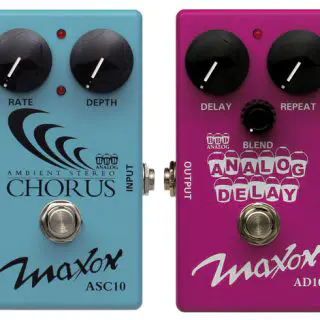
 Maxon has been cranking out guitar effects for nearly as long as the idea has been around. With all of the years designing quality stompboxes it should come as no surprise that their new compact series effects, the AD10 Analog Delay and ASC10 Ambient Stereo Chorus, jam incredible sonics into small format boxes that are built to last.... Click on the title for more
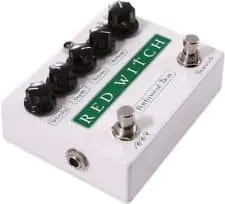
 Simple but infinitely charming, Tremolo is an effect that never seems to go out of fashion, making its way in most musical genres, from folk to... industrial. There are a bunch of rather unique tremolo pedals out there, and the Red Witch Pentavocal is definitely one of those.
This stompbox offers all your typical tremolo option: the Velocity knob controls the speed, Depth the intensity, while the left footswitch triggers various wave settings that change the character of the tremolo (square or round). But that's not it.... Click on the title for more
Simple but infinitely charming, Tremolo is an effect that never seems to go out of fashion, making its way in most musical genres, from folk to... industrial. There are a bunch of rather unique tremolo pedals out there, and the Red Witch Pentavocal is definitely one of those.
This stompbox offers all your typical tremolo option: the Velocity knob controls the speed, Depth the intensity, while the left footswitch triggers various wave settings that change the character of the tremolo (square or round). But that's not it.... Click on the title for more
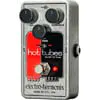
 "Vintage" is a word that keeps inspiring many guitarists (and collectors of all kinds). Electro Harmonix, one of the very first manufacturers to unleash the creative possibilities of the stompbox format, has a series of pedals that can be filed under that category, and the 1970s Overdrive CMOS Hot Tubes is definitely one of those - see a video below of the original (and rather bulky) unit, now quite pricey and hard to find.... Click on the title for more


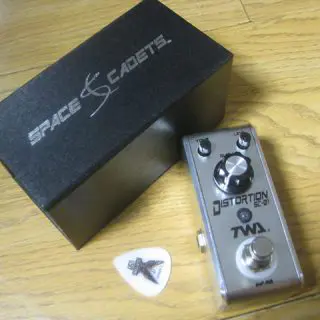
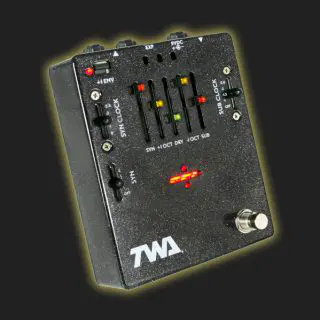
 Compact stompboxes are setting the guitar pedal world's abuzz these days, and after products from Malekko, Mooer, TC Electronic, Barber and a few others, it's now TWA pedals' turn to announce a line of small footprint devices, called "Space Cadette." These new mini effects will be available in the fall and include Echo, Chorus, Overdrive, Distortion, and Metal Distortion - with other effects probably available next year.
... Click on the title for more
Compact stompboxes are setting the guitar pedal world's abuzz these days, and after products from Malekko, Mooer, TC Electronic, Barber and a few others, it's now TWA pedals' turn to announce a line of small footprint devices, called "Space Cadette." These new mini effects will be available in the fall and include Echo, Chorus, Overdrive, Distortion, and Metal Distortion - with other effects probably available next year.
... Click on the title for more



---
SKATERS excitedly pronounces their name repeatedly on landing on their nondescript website. But once you've seen the pizza-loving video for 'Schemers,' you'll get a better idea for the sense of humor the trio is capable of. Shooting toy guns through confetti-soaked backgrounds, it's obvious this is a band looking for a party. And with this much energy, there can't be one far behind. The band was selected as The Deli writers' best band of 2012, and recently signed a deal with a major label. Be ready to get familiar with them.... Click on the title for more