Author Archive
Engineered to inject performance-oriented chaos into a traditional BBD circuit, the DOD DRAG pushes analog delay far beyond simple, predictable repeats. Providing up to 750ms of natural analog delay time that stretches to 1.5 seconds in Rubberneck mode, it ranges effortlessly from crisp, punchy slap-back echoes to expansive, self-evolving ambient soundscapes. At the center of its performance capabilities are advanced time-warping and modulation features driven by the Friction™ and Drift controls. Holding down the footswitch unleashes three unique friction modes – Rubberneck, SlideStop, and Evade – complete with distinct speed and depth variations that let you ride the chaos of pitch bends, sudden stops, and stuttering playback. Meanwhile, the modulation section features four selectable waveforms paired with light, medium, and heavy ranges to add everything from smooth, classic tape-like warbles to unpredictable, glitchy movement. The feature set and core controls are organized as follows: Time Knob & Delay Range: Delivers 750ms of standard BBD delay time, doubling up to 1.5s when utilizing Rubberneck mode. Feedback Control: Regulates the number of repeats, taking your signal from tight echoes to self-sustaining, atmospheric oscillations. Level Control: Balances your dry instrument signal and the wet delay, moving smoothly from subtle ambience to fully saturated […]... Click on the title for more
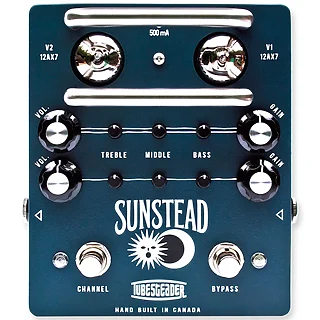
Can a stompbox truly capture the sweeping, atmospheric weight of modern post-rock right at your feet? Developed in close collaboration with Torsten Kinsella of God Is an Astronaut, the Tubesteader SUNSTEAD is a dual-channel, high-voltage tube preamp and overdrive engineered specifically for the sprawling dynamics of indie, post-rock, and shoegaze. Rather than relying on simulated voicings, the circuit runs dual 12AX7 vacuum tubes at full plate voltage, delivering the authentic, organic compression and touch sensitivity of a real British alternative-rock stack. The architecture is divided into two distinct, highly flexible characters: Channel I: Spans a broad gain landscape, moving fluidly from moody, transparent cleans to harmonically complex, touch-responsive overdrive. Channel II: Steps up the aggression with heightened upper-mid presence and higher gain, pushing effortlessly from crunchy rhythm textures into dense, saturated distortion. Both channels feature independent gain and volume controls for seamless level matching, backed by a passive 3-band EQ and a side-mounted Tone Cut switch. This clever switch lets you optimize the output: drop it down to roll off highs and reduce output for front-of-amp running, or flip it up for full-bandwidth frequency response when driving an effects return, power amp, or cabinet simulator. Equipped with a 3.5mm TRS […]... Click on the title for more
What happens when you take the sprawling workflow of a desktop DAW and distill it down to a rugged, floor-ready chassis you can pilot with your shoes? Bridging the gap between traditional looping and full-scale production, the Polyend Loop shrinks complex studio power into a pedalboard-friendly workstation. Rather than treating looping as a simple utility act, Polyend has engineered a complete, loop-based audio ecosystem that invites genuine composition and full-scale world-building right under your feet. At its core, the unit centers on four independent loop tracks, offering up to 52 seconds of mono or stereo recording time per channel. Playback is deeply flexible, supporting forward, reverse, ping-pong navigation, and varispeed timing. What separates it from conventional loopers, however, is the integration of a four-track drum machine running alongside your loops, stocked with over 500 drum kits, 350 rhythms, 2,000 samples, and 180 pre-made loops loaded via microSD. Per-Track FX Architecture: Every single loop channel features discrete, assignable effects—including deep reverb and delay options, classic modulation (chorus, phaser, tape echo), waveshaping overdrives, filters, and spatial panning. Granular Step-Sequencing: Program and customize over 15 distinct drum parameters independently on every step, chain patterns into extended arrangements, or live-record your own samples straight through […]... Click on the title for more
For players who love the tactile footprint of individual stompboxes but occasionally need an entire ecosystem under their feet, the BOSS EX-4 Effects Expander bridges the gap. Rather than demanding a wholesale layout redesign, it slips onto a board as a high-utility problem solver, packing a staggering library of 120 historic and modern BOSS algorithms into a compact, dual-footswitch chassis. At any given moment, the EX-4 lets you run up to four simultaneous stereo effects from BOSS’s massive pool of familiar algorithms, spanning everything from staple overdrives and lush delays and reverbs to quirky catalog oddities like the Slow Gear and Slicer. Navigating the unit feels refreshingly immediate thanks to a vivid 2.4-inch color LCD and dedicated FX buttons whose backlight colors dynamically match your active blocks. Depending on what you have highlighted on the display, the three parameter knobs map dynamically to whatever three functions correspond to that specific row on the screen (such as Drive, Tone, and Level, or Rate, Depth, and Feedback). They give you immediate, hands-on control over your active sound without forcing you to dig through nested menus. The dual multi-function footswitches can be custom-assigned to several operational roles—including tap tempo for delays and modulation, effect block […]... Click on the title for more
The TAMPCO Tone Oven Custom is a limited edition of an overdrive celebrated for its warmth and transparency. While the original design required cracking open the enclosure to tweak internal trimmers, this special release relocates those crucial Bass and Comp controls straight to the front panel for effortless adjustments on the fly. Designed to cook your tone without choking your natural low end, the pedal features a streamlined, intuitive control set: Core Knobs: Curiously named standard controls for Fan (output level), Temp (shaping high frequencies), and Time (dialing in the warmth and saturation) provide a transparent, organic foundation that preserves your instrument’s core character. Grill Mode: Engaged via a dedicated footswitch, Grill mode layers on a second, more aggressive saturation circuit (inspired by hard-clipping architectures) to instantly cook your tone, add a crisp crunchy edge, and push your guitar straight out in front of the mix for solos. Front-Panel Tweaks: The updated exterior layout gives you immediate, hands-on access to a dedicated Bass-Cut toggle to instantly tighten up low frequencies in a live mix, alongside a headroom switch to tailor the compression profile of the Grill circuit. Whether you are using it as an always-on warmer to push the front […]... Click on the title for more
Designed less like a traditional stompbox and more like a high-end studio preamp for your instrument, the Westerlund ONE treats your core tone as something to elevate rather than replace. Built around three unique FET-based op-amp gain stages and a FET tone recovery stage, it captures a remarkably authentic, tube-like feel with massive headroom and exceptional touch sensitivity. The pedal’s versatility stems from a deeply configurable architecture: Flexible Clipping Modes: A 3-way toggle lets you choose between Hard clipping, Soft clipping, or disengaging clipping entirely (“Amp Mode” for clean, transparent boosts), while a dedicated switch lets you select between Germanium or Silicon diodes to tailor the grit. Pre-Gain Boost: An independent, adjustable boost circuit sits before the gain stage, making it easy to jump from a subtle volume lift straight into rich, amp-like saturation and compression. Sculpted Tone Controls: Features a musical, responsive 3-band EQ (Bass, Middle, Treble) alongside a global Bright/Dark tone switch to help the pedal sit perfectly with any guitar or rig. Whether you need a pristine, high-headroom line driver, a touch-sensitive overdrive, or a roaring preamp to punish the front end of your amp, the Westerlund ONE provides a polished, professional-grade foundation that honors your natural […]... Click on the title for more

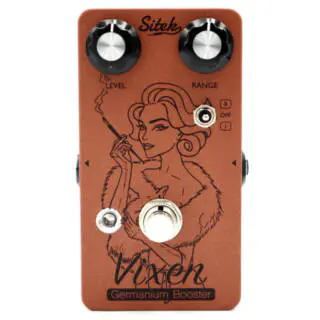
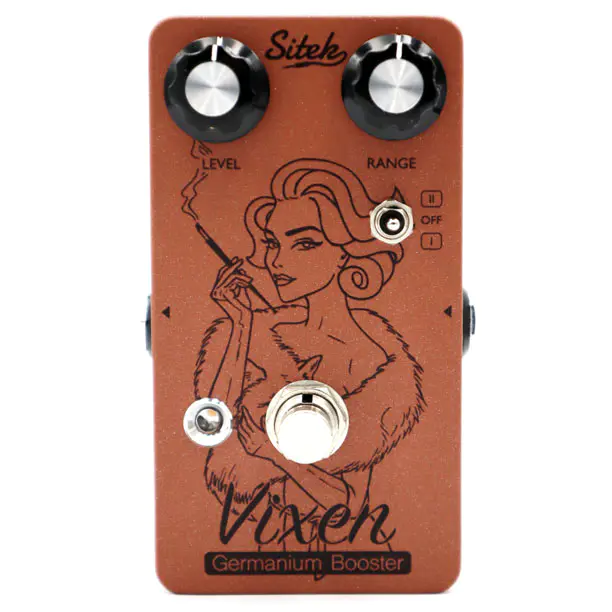 Based out of Poland, husband and wife-run


 Creative
 Delay
Delay
 Dirt
Dirt
 Dynamics
 Filter+EQ
 Lo-fi
Lo-fi
 Modulation
 pitch
pitch
 Reverb
 Synth
Synth
 Shopping Guides
 Stompbox Exhibit
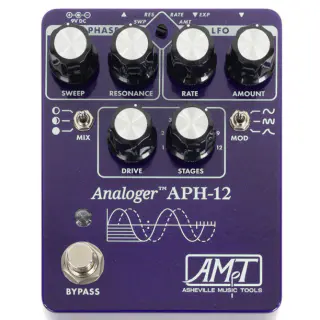
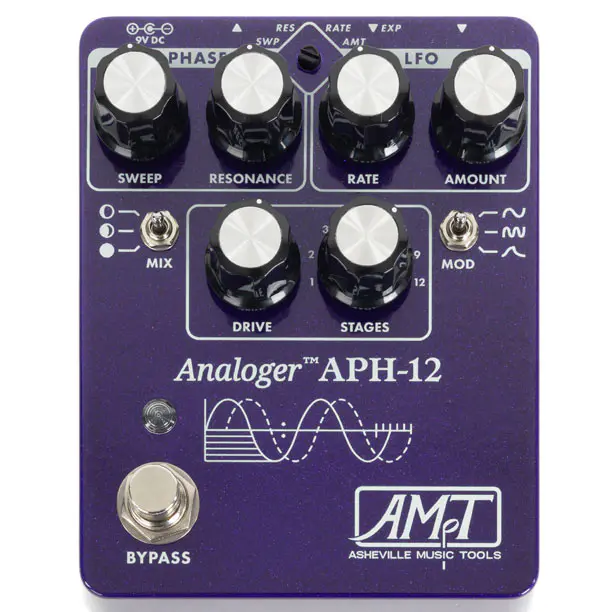 The Asheville Music Tools Analoger APH-12 is the North Carolina company's take on Jimi Hendrix's favorite modulation effect. True to its name, this fully analog phaser with the unique feature of offering up to 12 stages of phase-shifting, selectable via a 12-position rotary knob.... Click on the title for more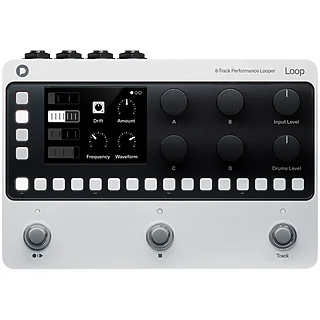


 The
The 


 The
The