Author Archive
As a foundational architect of unorthodox guitar expression—from his early work with Frank Zappa and David Bowie to Talking Heads and a nearly thirty-year tenure fronting King Crimson—Adrian Belew turned a rare late-1970s bucket-brigade device into his ultimate secret weapon. That vintage Electro-Harmonix Echoflanger was the driving force behind the iconic steel drum textures on Tom Tom Club’s “Genius of Love” and the uncanny animal cries on King Crimson’s “Elephant Talk.” The Electro-Harmonix Adrian Belew Echoflanger Reissue brings that legendary, elusive analog circuit back to life. Faithful to the original analog architecture, it delivers the exact warbles, sweeps, and extreme modulation that defined Belew’s signature sound, while updating the platform with modern touring reliability. The pedal organizes its expansive sonic palette through a deeply interactive control set and expanded routing options: Four Core Modes: Faithfully reproduces the vintage layout via Filter Matrix (disengaging the LFO for fixed comb-filtering and manual chimes), Flange (classic sweeping modulation), Chorus (lush, shimmering modulated echoes), and Slap Back (tight, clean delay without modulation). Extended Combo Modes: Introduces two heavily requested hybrid settings inspired by Belew’s own physical “in-between” switch tweaks—Chorus + Flange and Slap Back + Filter Matrix—layering shimmering thickness with comb-filtered resonance. Precision Controls: […]... Click on the title for more
The SGFX Fuzzbox is a modern evolution of one of the most iconic British fuzz circuits ever conceived—the Tone Bender Mk II. Born in mid-sixties England, the original design helped shape the raw, high-gain landscape of early rock in the hands of legends like Jimmy Page, Jeff Beck, and Mick Ronson. It wasn’t merely distortion; it functioned as a living extension of the guitar, cleaning up organically with a roll of the volume knob and blooming into singing, harmonic sustain when pushed. Instead of chasing an unyielding, museum-piece clone, the Fuzzbox focuses entirely on feel. At its heart are carefully selected low-gain silicon transistors engineered to deliver the warmth, bite, and touch sensitivity of vintage gear, but with the reliability and range required for contemporary setups. The pedal relies heavily on tactile control to bridge vintage grit with modern utility: Vintage/Modern Toggle: The Vintage setting provides the raw, immediate response of a classic Mk II, maximizing direct guitar-to-circuit interaction for explosive attack. Flipping to Modern smooths out the input, introduces a fuller low-end presence, and ensures seamless compatibility with buffers, wah pedals, and crowded boards. Bias Control: Adjusts the operating point of the third transistor, shifting the texture from a […]... Click on the title for more
The Dazatronyx Big Fuzz Console is an absolute dream for fuzz obsessives and circuit tinkerers, offering a true open fuzz laboratory that lets you “unroll” a four-stage Big Muff circuit, giving direct front-panel access to the architecture so you can map out vintage specs like Triangle, Ram’s Head, or Russian units—or venture entirely off-map into custom territory. Hand-built in Melbourne by Darron Thornbury, the Big Fuzz Console takes a delightfully mad approach to a classic design by bringing nearly every defining component value directly to the user. Rather than trying to rigidly replicate inconsistent vintage units, the pedal offers an expansive playground for analog exploration. The layout and features are structured across five distinct, right-to-left sections that mirror the physical signal flow of the circuit: Stage 1 (Gain Boost): Features its own rotary transistor selector, independent biasing, and component-level toggles to shape the initial input gain stage. Stage 2 (Gain Boost with Diode Clipping): Incorporates a rotary transistor selector, selectable clipping capacitors (including a no-clip option), and dedicated clipping-stage controls. Stage 3 (Gain Boost with Diode Clipping): Mirrors the second stage with its own transistor switching, clipping capacitor selection, and circuit-tweaking toggles. Passive Tone Control Stage: Features dedicated rotary controls […]... Click on the title for more
Hello, NYC noise makers! The Brooklyn Synth & Pedal Expo is back, October 17–18, and it’s bigger than ever, with about 15% more brands than last year! Our small-ticket experiment worked beautifully, so we’re sticking with it. Your $5–$25 ticket helps us keep exhibitor costs low and makes it possible for more independent builders to join the party. The result: more builders, more gear, more discoveries, and more of the community we’ve been building since 2011. Come play with hundreds of pedals and synths, meet the people behind them, and discover your next obsession. INFO | EXHIBITOR LIST | TICKETS While waiting, check out these videos from last year’s show!... Click on the title for more
Stepping away from pristine, clinical repeats, the Walrus Audio Fundamental Lo-Fi Delay delivers gritty, degraded echoes designed to add atmosphere and character to your board without forcing you through frustrating menu-diving. Part of Walrus’s acclaimed streamlined series, it packs professional-grade sonic integrity into a clean, intuitive layout utilizing tactile control sliders. At the heart of the pedal is a 3-way toggle switch housing three distinct delay algorithms: AM Mode: Accentuates high frequencies with a restricted bandwidth, yielding bright repeats that gracefully bloom into ambient trails. Murk Mode: Generates dark, atmospheric delay clouds that dynamically react to your pick attack, sitting comfortably underneath your playing. Echo Mode: Introduces syncopated multi-tap rhythms packed with gritty degradation, making the most of the built-in tap tempo. True to the company’s Fundamental series‘ philosophy and format, the top panel relies on a clean, no-nonsense interface featuring simple sliders for Time, Feedback, and Mix. Holding down the rugged footswitch engages tap tempo (with secondary slider functions controlling subdivisions), while internal power-up configurations let you choose between natural trails or a dramatic immediate cutoff. ... Click on the title for more
When Portland’s Catalinbread set out to design the EG-1, their goal was to move past the simple buzzword of “lo-fi” and truly examine what physical degradation and signal decay actually feel like. Built as the second release on their tap-tempo platform, the EG1 packages up to 900ms of delay time into a deeply experimental yet remarkably musical processor, offering high headroom and an enhanced signal processing path that keeps your core tone intact even as things get delightfully grungy. Rather than relying on a single emulation style, the pedal introduces three distinct transmission modes that fundamentally alter how the delay line behaves: Radio Mode: Simulates the character of an old broadcast receiver, utilizing targeted high-pass and low-pass filtering. Here, the Mod control shapes the filtering intensity to dial in everything from a warm, band-passed echo to a harsh, distant transmission. Tape Mode: Emulates the organic mechanical quirks of vintage tape machines. The Mod control adjusts the depth of the wow, flutter, and tape saturation, providing everything from a subtle, breathing warble to a heavily degraded, unstable loop. Digital Television Mode: Introduces grit via digital artifacts and downsampling. The Mod control applies a gritty Nyquist error, mangling high frequencies with glitchy, […]... Click on the title for more
The IK Multimedia TONEX Board is a cost-effective flagship floor processor that finally bridges the gap between software captures and professional touring hardware. It integrates the vast ToneNET library directly into a live rig, offering uncompromising flexibility without the typical four-figure price tag. The TONEX Board centers around IK’s award-winning AI Machine Modeling technology, which maps the exact dynamic response, volume-knob cleanup, and feel of real-world amplifiers, cabinets, and pedals. Expanding far beyond a standard modeler, it features a robust dual-signal-chain architecture supporting up to four Tone Models simultaneously, complemented by over 70 studio-grade effects derived from AmpliTube. Dual-Chain & Routing Flexibility: Runs dual-amp, wet/dry, or true stereo rigs with split-and-mix routing, 12 effect slots per preset, and a versatile stereo FX loop that can function as two independent mono loops. Control & Navigation: Features a high-resolution 5-inch color touchscreen with five precision encoders, alongside four footswitches configured across three performance modes (Preset, Scene, and Stomp). Extensive Preset Storage: Houses over 1,400 preset slots organized across 12 setlists, 40 banks, and 3 presets per bank. Tour-Ready I/O: Equipped with independent stereo output pairs (balanced XLR and 1/4-inch line) with global parametric EQs, MIDI I/O, dual expression pedal inputs, and a […]... Click on the title for more
Packing that legendary 1960s Black Panel amp character into a streamlined, pedalboard-friendly footprint, the Mad Professor Super Black Mini brings pure vintage tone to a smaller stage. Featuring a fully analog circuit that faithfully maps out the entire signal path of a classic tube amplifier, it delivers true amp-like touch response. Compared to the original mid-sized unit, the Mini is built with a few vital updates: Streamlined Footprint: The secondary Sweet Honey Overdrive section found on the original has been removed, resulting in a much smaller enclosure that saves precious board real estate. Retained Core Preamp Control: Despite its smaller size, it keeps all eight essential tone-shaping controls intact, including Bass, Middle, Treble, Gain, Volume, Presence, plus the Bass Cut and Compression toggle switches. Enhanced Headroom: Redesigned with increased headroom and a higher output level, the Mini lets those signature sparkly, percussive cleans and punchy dynamics cut through with extra authority. Whether you want pristine glass-like chime at lower gain settings or the glorious, organic breakup of a cranked tube amp without shaking the room, the Super Black Mini handles it all. Run it directly in front of your amplifier as a powerful tone shaper, or drop it straight into […]... Click on the title for more


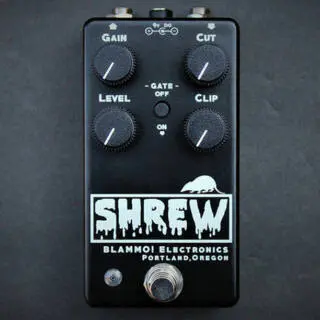
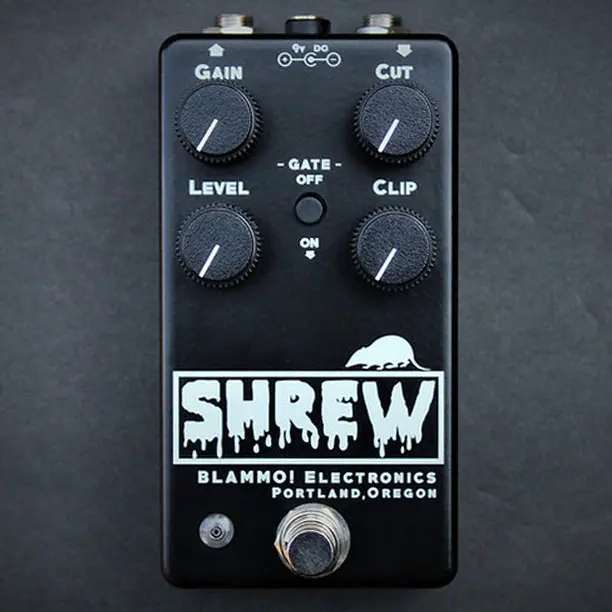 The
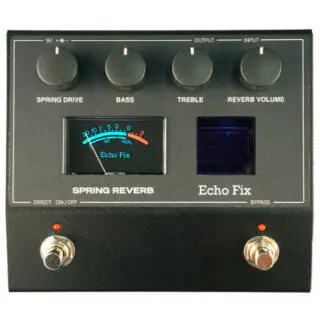
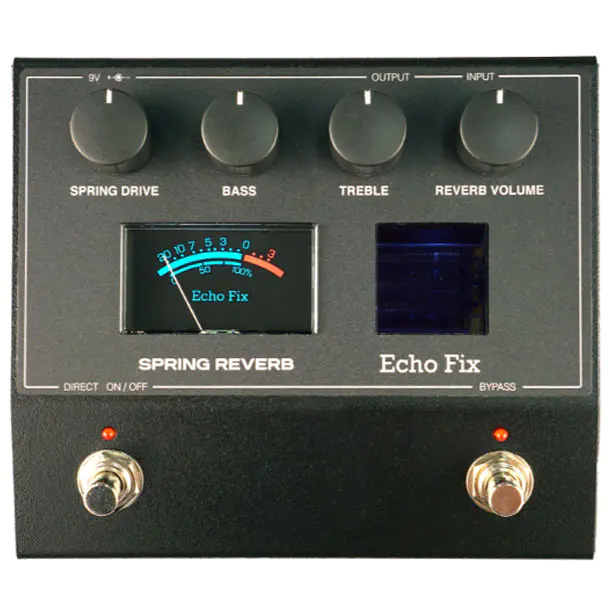 The





 Creative
 Delay
 Dirt
 Dynamics
 Filter+EQ
 Lo-fi
 Modulation
 pitch
 Reverb
 Synth
 Shopping Guides
 Stompbox Exhibit