




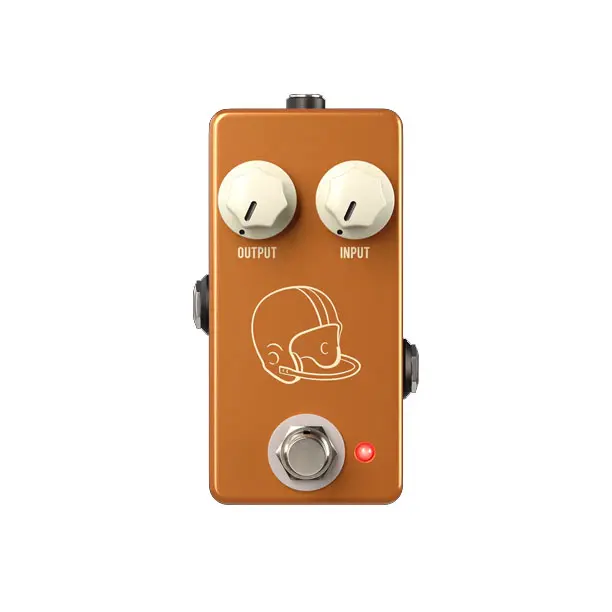
Here’s the thing about mistakes: some of them you bury. Some of them you put in a box and sell for eighty-nine dollars.
JHS dropped the NOTADÜMBLË in May 2025—a solderless DIY kit with two circuits. One was an overdrive based on the Dumble lead sound. The other was supposed to be the “Box It Later,” a buffered loop device Josh cloned from John Mayer’s personal unit. Except it wasn’t. Josh grabbed the wrong circuit from R&D archives. Two similar Dumble preamp boxes, one massive mix-up. Fifteen thousand units shipped before anyone noticed.
So they fessed up. Refunded anyone who asked. Discontinued the whole thing.
And then something weird happened: people realized they actually loved the “wrong” circuit. So here comes the Fumble. That exact circuit, standalone, compact, no soldering required. Named after the biggest fumble in JHS history, because if you can’t laugh at yourself, you shouldn’t be building pedals.
Here’s the real twist—that circuit isn’t even a Dumble design. It’s a JFET preamp lifted almost part for part from a 1970s Barcus Berry acoustic piezo preamp. Howard Dumble cloned it, stuffed it in his own box, called it the BBC-1, and later used the same JFET stage inside his amplifiers as the legendary FET mode. The $200,000 Dumble FET sound? A clone of an acoustic preamp from the Nixon era.
The Fumble is a clone of that clone of that clone. Three generations deep.
Two knobs. Input attenuates bass and gain simultaneously. Output is your master volume. Use it as a clean boost. Use it to slam your overdrives. Use it to make a cranked amp bigger and more articulate without losing your mind.
True bypass. 5mA draw. Assembled in Kansas City. No hype. No hand-wound unobtanium. Just a beautiful, simple JFET boost born from a happy accident and a fourteen-year-old name that was already waiting in a drawer.
Sometimes the universe hands you the punchline way in advance.