




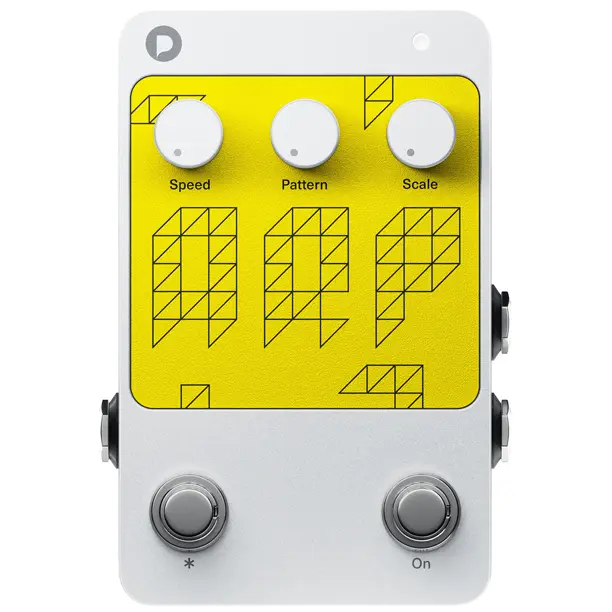
We saw this “thing” at NAMM 2026. The booth was crowded with similarly looking pedals with a varying range of graphics. Guitarists were frantically typing things like “reverse reverb that pitches up an octave” into a laptop and then stepping on a pedal that actually did it. People were losing their minds.
Here’s the thing, though. Polyend isn’t a pedal company. They make grooveboxes—the Play, the Tracker. But they looked at the pedal world and saw the same thing everyone else sees: too many boxes, not enough board space. Their solution isn’t another multi-effects unit. It’s a blank slate.
The Endless is a stereo 48kHz/24-bit digital pedal with an ARM Cortex-M7 processor, three knobs, two footswitches, and no built-in effects. Zero. You put whatever you want inside it.
Three ways to do that.
- code in C++ using their open-source SDK. Free. Unlimited. For programmers .
- download community effects from their growing library. Free. Already dozens available—Multidrive, Tessera, Tape Scanner, 65′ Sparkle amp sim.
- use Playground, their text-based AI generator. Type “granular delay that smears into reverb” and it builds the algorithm. This costs tokens. $20 worth come with the pedal. A simple delay might run a buck or two, a complex looper up to five.
The magnetic faceplates swap out so your controls stay labeled. Expression input. USB-C drag-and-drop loading. Runs one effect at a time because the whole point is focus, not paralysis.
Two hundred ninety-nine dollars. It’s either the future or a very expensive toy. But watching someone describe a sound into existence at NAMM? That felt like something.