Author Archive

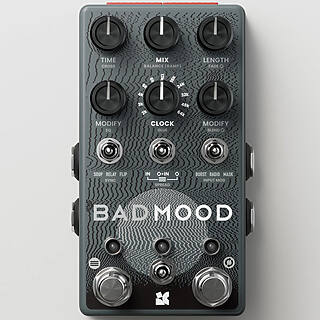
The MOOD MKII, released a couple years back, became one of those pedals people either bonded with immediately or spent months trying to figure out. The Chase Bliss BAD MOOD is the third pedal in the company’s Small Batch Bliss collection — a limited-run, made-to-order special edition that takes the same two-channel “instant bliss” workflow and points it somewhere darker. The left side is still your effect suite — reverb, delay, pitch shifting — and the right side is still a micro looper that grabs brief moments and stretches them into something else. But BAD MOOD leans into the noisy, improper, trouble-making side of the design. It’s about musical disguises, radio loops that drift in and out of tune, splintered harmonies that don’t quite resolve. The two stereo channels can interact and interfere with each other in ways that feel less like an effect and more like a second musician who’s not following the chart. It’s stereo I/O. Two internal presets, 122 more via MIDI. Internal modulation via ramping. Full MIDI control — note, PC, CC, clock sync. CV control. Expression pedal input. Trails on or off. Analog dry-through with buffered bypass. 9V DC, center negative, about 200 mA. The […]... Click on the title for more
When it came out, the Timeline was the delay pedal that made other delay pedals feel like toys. The Strymon Timeline MX doesn’t replace it — it mutates it. The original’s twelve machines are still here — dTape, dBucket, Digital, Dual, Pattern, Reverse, Trem, Filter, Diffuse, Ice, Duck, and Lo-Fi — but they’ve been rebuilt from the ground up. More headroom. Better fidelity. The same familiar sounds, just deeper and cleaner than they had any right to get. But the new stuff is where it gets interesting. Five new engines that weren’t in the original. Oil Can is the one that’ll stop you mid-play. It models the warble and compression of those old oil can delay units — the ones that were obsolete before most of us were born. It’s greasy, it’s unstable, and it sounds like a machine that’s trying to remember how to work. Spectral is something else entirely. It breaks your delay repeats into frequency bands and lets you process them independently. Think shimmer without the cliché — ethereal without being saccharine. Drum is a modeled analog delay based on a drum echo unit. It’s darker, punchier, more percussive than the tape models. Slapback on this thing […]... Click on the title for more
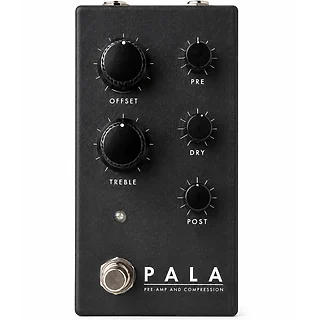
The Audio Cultivation Project PALA Compressor started as a commission for a transparent compressor without the pumping common to OTA-based designs, then spent three more years in development. It’s still a compressor, but evolved to capture the feel of a loud amp in a reverberant room — that clean, edge-of-feedback phenomenon, within analog limits. Its preamp is loosely based on a Bassman 10 with ultra-linear transformer: dry, slightly trashy, unique. It also works as a standard compressor. In highest headroom mode, preamp clipping is bypassed and it handles up to 5V peak-to-peak signals without distortion. It drives 10K ohm loads with no frequency loss, making it at home with line-level gear as well as guitar and bass. EQ controls include a treble control with 10dB boost/cut, plus an adjustable dry low-passed path for bass, keys, and other instruments.... Click on the title for more
The original Plus Pedal was one of those things that felt like a secret weapon — piano-style sustain for any instrument, wrapped in a brass footpedal that made you feel like you were doing something physical. It wasn’t a freeze pedal. It was smarter. It grabbed the tail end of your playing and held it there, organic and alive. The Gamechanger Plus Pedal II keeps that soul and rebuilds everything around it. What stayed. The brass pedal is still there — gradual optical control, smooth across its whole range. The core idea hasn’t changed: press down after a note or chord, and the pedal captures the tail of your sound and sustains it. It’s still a “smart looper,” not a glitchy freeze. It still works on guitar, synth, violin, whatever you plug in. The housing is still tour-tough. What changed. The engine is completely new. The original’s spectral sampling was good. The Plus II’s is best-in-class — faster, more accurate, better at preserving timbre and dynamics. No artifacts. No glitches. Just clean, natural sustain. The controls expanded significantly. There’s a Layers knob now — 1 to 10 layers, or infinity for endless stacking. Auto Layer Catch lets you keep your […]... Click on the title for more





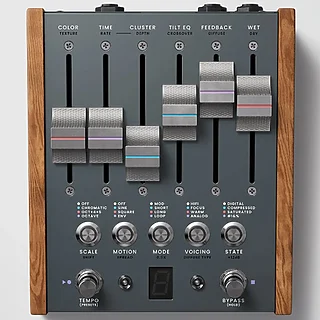
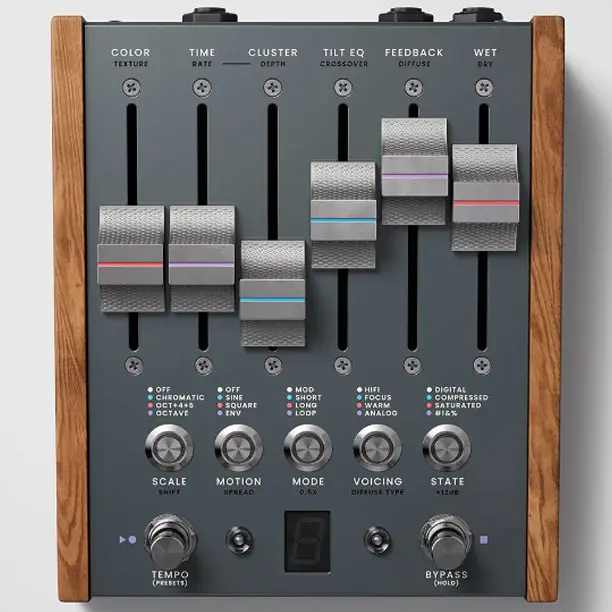 A thousand dollars. For a delay pedal. Let that sink in.... Click on the title for more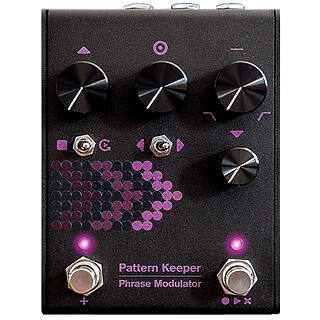
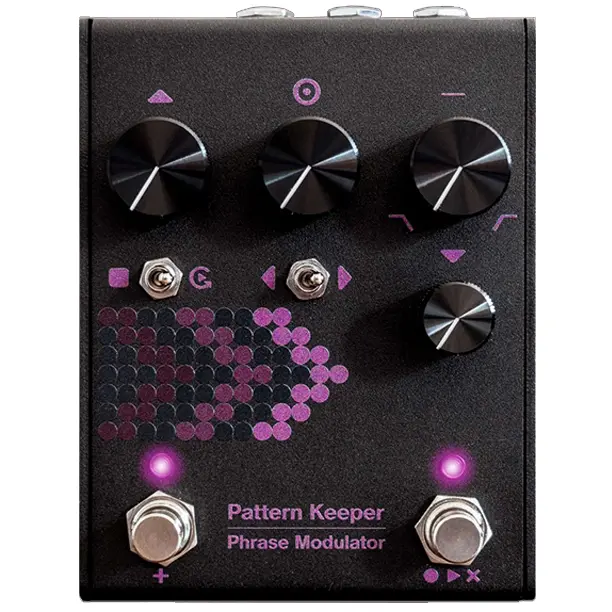 The looper is a tired format. Most of them just capture and repeat—useful, boring, done. NativeAudio's Mike Trombley looked at that and asked: what if the loop kept moving?
The Pattern Keeper is a phrase modulator disguised as a looper. Sixty seconds of stereo recording at 48kHz/24-bit, analog dry path, buffered bypass . But the capture is just the beginning.... Click on the title for more
The looper is a tired format. Most of them just capture and repeat—useful, boring, done. NativeAudio's Mike Trombley looked at that and asked: what if the loop kept moving?
The Pattern Keeper is a phrase modulator disguised as a looper. Sixty seconds of stereo recording at 48kHz/24-bit, analog dry path, buffered bypass . But the capture is just the beginning.... Click on the title for more