
//

Posts tagged "Recording"

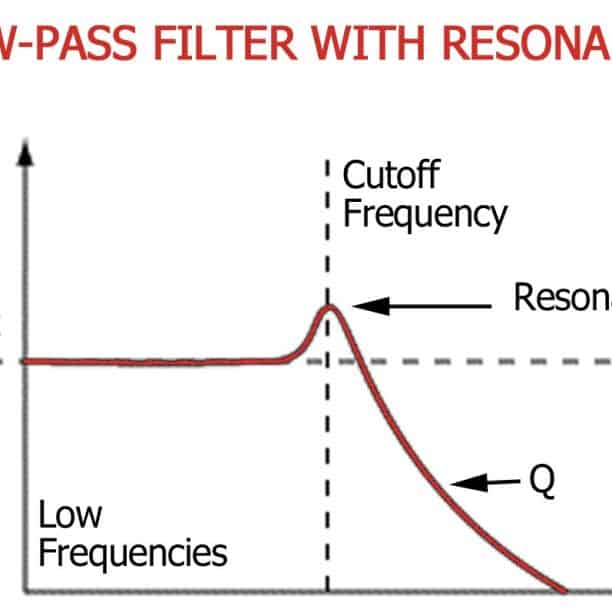
Know Your Filters: Low Pass, Band Pass, High Pass, Resonance.

Electronic music wouldn't sound much different from its electric sister if filters hadn't been invented. A filter is a frequency amplifier (or "tamer") device, i.e. an effect that operates on the frequencies of a sound - it can boost them, cut them or mute them, but it can't create ones that don't exist in the original. So it's basically just an EQ, although one that gets used for sci-fi sounding effects rather than for improving the quality of recordings (like during the mixing process).... Click on the title for more

Know Your Filters: Low Pass, Band Pass, High Pass, Resonance.

Stationary Set’s Recording Process

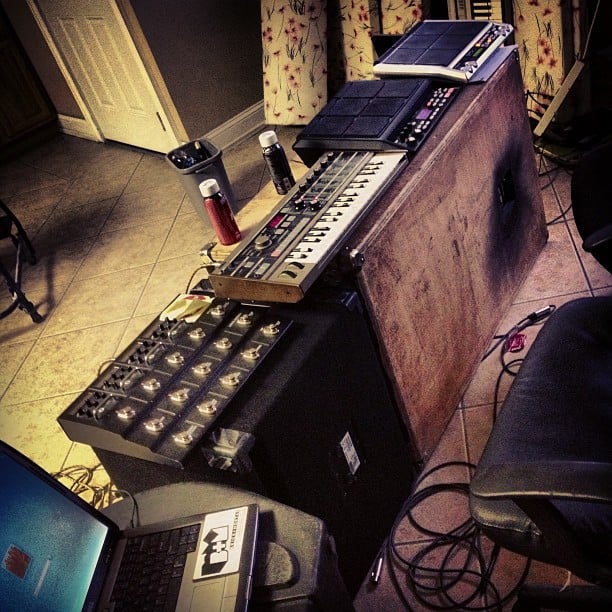
When it comes to melody, Brooklyn’s The Stationary Set is anything but shy. Their brand of electro pop is dramatic and soulful – these 5 dudes are not afraid to get feely and they’re mindful of said feeliness. On their Facebok page, it’s mentioned that they strive "to make the 'pop' in pop music less of a dirty word." Their cover of Pat Benetar's "We Belong" is an embodiment of this; pulsating, hazy electro lends the ‘80s classic new depth. The electronic touches that pepper their sound are never isolating, they just expand it. In fact, The Stationary Set finds their sound at its best when let loose within a large space. And, since forming in 2009, they've had their fair share of big venue performances. They shared the stage with Phoenix and Mumford & Sons and most recently played a sold out show at Highline Ballroom along with January Jane. The band is recording an album over the course of the winter, so stay tuned for more warm and fuzzy goodness.... Click on the title for more

Stationary Set’s Recording Process

The Old-Timey Single Mic Technique

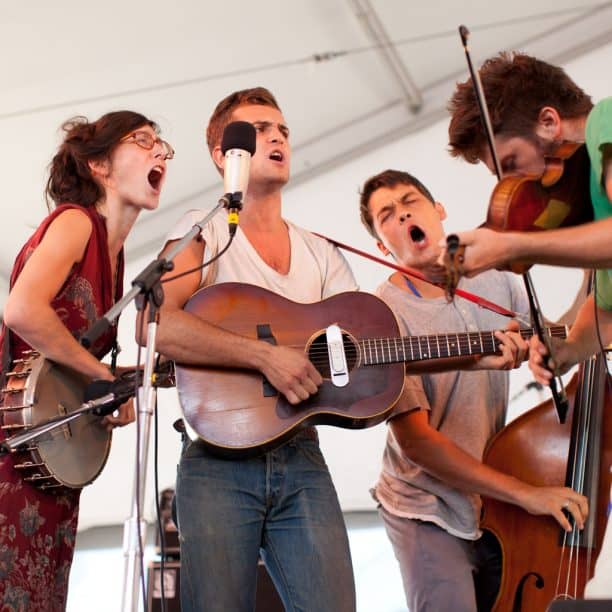
If you are into folk music, you may have noticed that more and more revival country bands share just one microphone on stage - we witnessed that ourselves when Spirit Family Reunion (pictured) played our NYC B.E.A.F. at Brooklyn Bowl last June. This is an old-fashioned technique that still works wonderfully (also visually) for a genre as communal as folk music, with the added bonus of allowing musicians to control their voices (and the lead instruments') volumes by moving closer or farther from the mic.... Click on the title for more

The Old-Timey Single Mic Technique

TEEN and the Recording Process

A former member of ambient indie pop group Here We Go Magic, Teeny Lieberson formed TEEN in 2011. Her sisters Katherine and Lizzie and friend Jane Herships completed the line-up, and the group started exploring Teeny’s musical interests, which had veered from the quirky indie pop of her previous band to percussive, organ heavy rock ‘n’ roll with psychedelic flourishes.... Click on the title for more

TEEN and the Recording Process

Band in the Studio: Aye Nako

Say what you will of Pitchfork (we kind of detest their judgmental, patronizing, 'this-is-the-truth-period'' style reviews), but it's commendable that they still manage to highlight albums and artists that are seemingly coming out of nowhere, like NYC Noise Pop band Aye Nako, that was granted out of the blue a very positive review earlier in 2013. We asked the band a few questions about their recording habits.... Click on the title for more

Band in the Studio: Aye Nako

Bands in the Studio: Skaters

---

SKATERS excitedly pronounces their name repeatedly on landing on their nondescript website. But once you've seen the pizza-loving video for 'Schemers,' you'll get a better idea for the sense of humor the trio is capable of. Shooting toy guns through confetti-soaked backgrounds, it's obvious this is a band looking for a party. And with this much energy, there can't be one far behind. The band was selected as The Deli writers' best band of 2012, and recently signed a deal with a major label. Be ready to get familiar with them.... Click on the title for more

Bands in the Studio: Skaters

Brick + Mortar and the Recording Process

New Jersey rockers Brick + Mortar are a refreshingly new sounding indie band bent on visual elements and electronic samples, which combined with their abrasive vocals, makes them stand out from the rest.  We asked the duo, made up of Brandon Asraf and John Tacon, some questions about their sound, which is certainly not a dull one.  Here’s what we learned!... Click on the title for more

Brick + Mortar and the Recording Process

Spirit Family Reunion and the Recording Process

Spirit Family Reunion, from whom you can expect a classic kind of Americana performed by musicians who know how to pluck a banjo the right way, sat with us to talk about their recording process. What really makes this band stand out is that they don't sound like they're re-inventing anything. When you see them live, the sound is all their own, and the soulful yelps and gospel harmonies in jams like 'I am Following the Sound' and 'On That Day' should convince you of what you've been missing. How much of your recording is done at home versus in the studio?  The first stuff we just did ourselves, in a basement on the Brooklyn side of the east river.  Usually on cassette or 1/4” tape.  We’d use those recordings to try and book shows, or burn em onto CDs to give out or sell whenever we could. More recently we’ve recorded in some small studios with friends. If you use a studio, what do you record there and what do you record by yourself and why? We pretty much record everything in the studio now. We want everything to have a consistent sound. What are the pieces of equipment that you find particularly inspiring when recording at home?  When we think about recording at home, first thing that comes to mind is this Tascam 388.  Its got 8 tracks, uses 1/4” tape, and most importantly is pretty easy to use.  Also happens to sound pretty good.  We probably first heard about the 388 from the early Dr Dog or Black Keys records. What one piece of hardware/software would you most like to add to your recording setup (cost not an issue)? Why?A really good 2 inch tape machine. I’d like to try to record on the same thing a lot of our favorite records were recorded on. ... Click on the title for more

Spirit Family Reunion and the Recording Process

Recording Tips: Acoustic Guitar as a Resonant Microphone

To make the music production process more creative and interesting, it's always good to try and record your tracks in ways that are not entirely ordinary. One way to add a new, intriguing layer to any loud instruments (like amped electric guitars or drums or even horns) is to use the pickup of an acoustic guitar as a microphone – and no, you don’t need to take it apart.... Click on the title for more

Recording Tips: Acoustic Guitar as a Resonant Microphone

Recording Tips: Fixing Proximity Effects, Sibilance and Plosives when recording vocals

Slow, sparse songs allow the vocals to become the central focus of the recording, and that’s when the choice of microphone and mic preamp can make a big difference. Not many can afford a Neumann U47 (pictured) through a Neve channel, but even with a limited microphone/preamp arsenal, a lot that can be done to improve your vocals’ tone. There is a degree of enigmatic “chemistry” between some mic+preamp combos and some voices – to be discovered through trial and error – but here are a few simple tips that can help fix some common problems: 1. The distance of the mouth from the microphone is crucial: vocal mics feature the so called “proximity effect” which exaggerates low frequencies at close distance and reduces them progressively after a certain range. 8 inches from the mic is normally a good place to start, try closer for a warmer tone, farther for a tinnier one.... Click on the title for more

Recording Tips: Fixing Proximity Effects, Sibilance and Plosives when recording vocals

Ambassadors and the Recording Process

Ambassadors' music is full and energetic, but they aren’t scared to slow things down and get sensitive from time to time. The sound of this Brooklyn based quartet emanates from drummer Adam Levin’s thunderous grooves and Noah Feldshuh’s powerful and catchy riffs; rounding it up, brothers Sam and Casey Harris fill out the band’s sound. Here is a bit on how they accomplish that while recording.... Click on the title for more

Ambassadors and the Recording Process

Laura Stevenson and the Recording Process

With the new album "Wheel", just fresh out of the oven, NYC songwriter Laura Stevenson decided to up the production value, steering away from the lo-fi approach of her previous two albums. She enlisted producer Kevin McMahon, someone whose work she respected immensely and who would, as she put it, “be the perfect set of ears for these songs.” She also brought in Rob Moose on violin and Kelly Pratt to play brass, adding their own layers of depth to the band’s full arrangements. Despite the move to sleeker production, the album retains its organic nature, relying primarily on the resonance of acoustic instruments and the electricity of simply over-driven amplifiers, with its most synthetic moment coming from a Roland organ, an unconscious decision explained as Laura Stevenson and the Cans’ way of “being real, relying on each other’s energy to keep time and just playing the songs like human beings, flaws and all.” ... Click on the title for more

Laura Stevenson and the Recording Process