




Author Archive

<
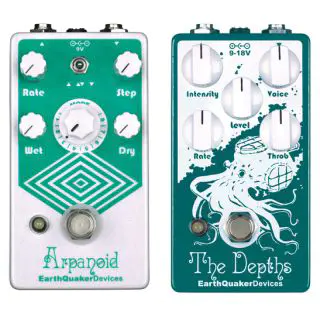
EarthQuaker Devices in the last few years has become one of the most buzzed about boutique stompbox manufacturers, and it sounds like they have no intention of letting the buzz dim.
The Akron, Ohio based company announced that at Summer NAMM 2012 it will be presenting two new pedals, which will start shipping in the fall: The Depth, a vibrato pedal featuring an optical circuit, and the Arpanoid, a compact polyphonic pitch arpeggiator effect pedal for electric guitar.... Click on the title for more
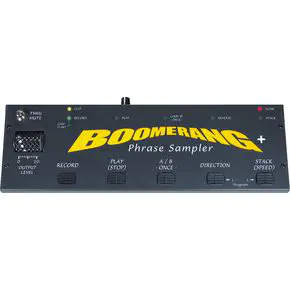

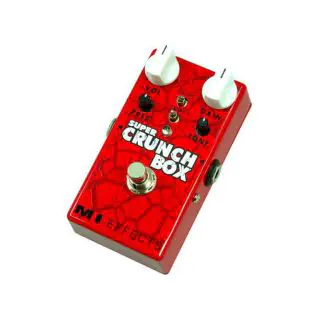
 Australian manufacturer of high end pedals and valve amplification, MI Audio (present at our SNAMM 2013 Stompbox Exhibit) was founded in 2002 and grew from hobby to small business when founder Michael Ibrahim realized that the circle of people wanting his debut pedal Tube Zone Overdrive was getting a little too large.... Click on the title for more

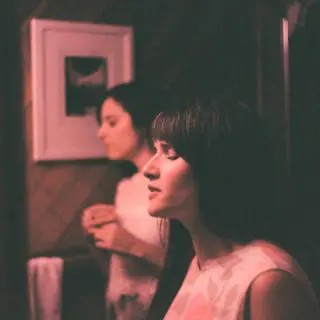
 Companion, a Brooklyn based art pop project with a twist, is the latest endeavour of singer Pepi Ginsberg (from Red and East is East). The process of developing this new sound began around Pepi's home recordings, along with vocal harmonies she created with founding members Anna Thorngate and Amy Carrigan. To flesh out these vocal-centric versions of the songs, she picked up her own guitar and turned to her longtime bass player, Tim Lappin, plus new guitarist Kirk Schoenherr. As we will explore in this interview, the band started to create a sound that incorporated both organic and electronic elements, often including Ginsberg's homemade beats. The lineup was later complimented by Dave Scalia on the drums and Companion is now out and promoting their eponymous debut album.... Click on the title for more

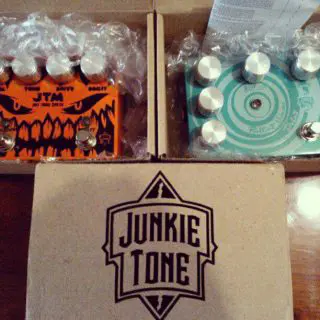
 Junkie Tone is a Mexican guitar and bass pedal company that will be participating to The Deli's Stompbox Exhibit at Summer NAMM in a week.
Although we can't find a page with all their products (they don't have a website besides the Facebook page), the boutique manufacturer seems to have at least a few dozens pedals available, including three 'mini' ones and some boxes for bass. One thing that's really great about being Mexican is that their prices are really affordable for the quality you get.... Click on the title for more
Junkie Tone is a Mexican guitar and bass pedal company that will be participating to The Deli's Stompbox Exhibit at Summer NAMM in a week.
Although we can't find a page with all their products (they don't have a website besides the Facebook page), the boutique manufacturer seems to have at least a few dozens pedals available, including three 'mini' ones and some boxes for bass. One thing that's really great about being Mexican is that their prices are really affordable for the quality you get.... Click on the title for more
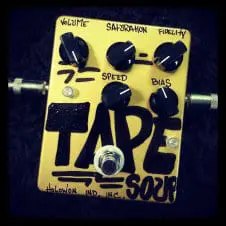
 The first Stompbox Exhibit at NAMM is next week (Summer NAMM in Nashville!) and we want to take the opportunity to highlight the various boutique manufacturers who will be participating.
Holowon is a small company based in Rochester, NY specializing in hand-built effect pedals. All their designs are 100% originals - no clones or copies - and they currently have 12 stompboxes on their "roster." Their effects utilize complete true bypass switching, hand-built point-to-point circuitry and wiring, virtually indestructible construction, and a lifetime warranty.... Click on the title for more
The first Stompbox Exhibit at NAMM is next week (Summer NAMM in Nashville!) and we want to take the opportunity to highlight the various boutique manufacturers who will be participating.
Holowon is a small company based in Rochester, NY specializing in hand-built effect pedals. All their designs are 100% originals - no clones or copies - and they currently have 12 stompboxes on their "roster." Their effects utilize complete true bypass switching, hand-built point-to-point circuitry and wiring, virtually indestructible construction, and a lifetime warranty.... Click on the title for more




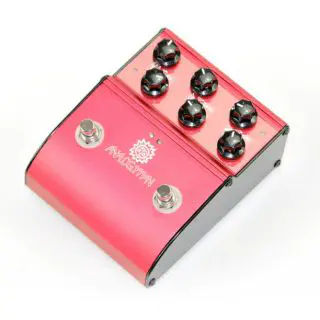




Ambassadors' music is full and energetic, but they aren’t scared to slow things down and get sensitive from time to time. The sound of this Brooklyn based quartet emanates from drummer Adam Levin’s thunderous grooves and Noah Feldshuh’s powerful and catchy riffs; rounding it up, brothers Sam and Casey Harris fill out the band’s sound. Here is a bit on how they accomplish that while recording.... Click on the title for more