

//

Posts tagged "mixing"

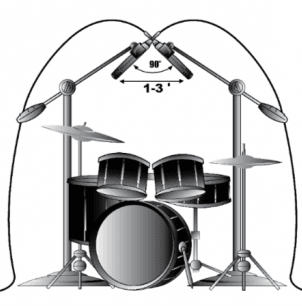
Mixing Drums Secrets: Eqing Overheads for Punch

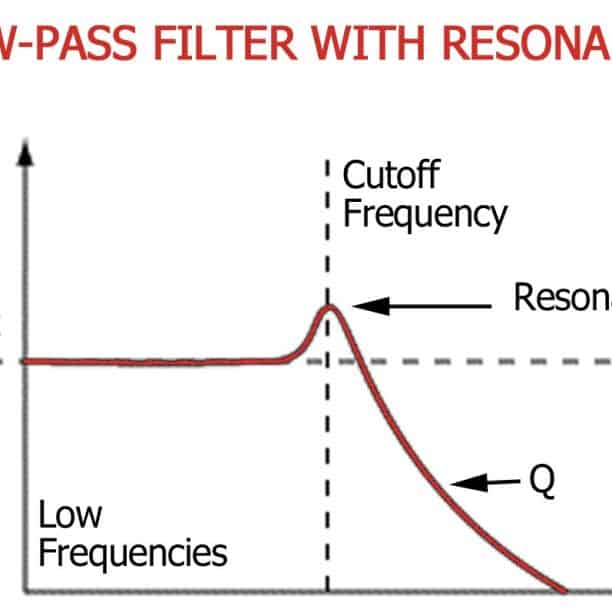
Know Your Filters: Low Pass, Band Pass, High Pass, Resonance.

Electronic music wouldn't sound much different from its electric sister if filters hadn't been invented. A filter is a frequency amplifier (or "tamer") device, i.e. an effect that operates on the frequencies of a sound - it can boost them, cut them or mute them, but it can't create ones that don't exist in the original. So it's basically just an EQ, although one that gets used for sci-fi sounding effects rather than for improving the quality of recordings (like during the mixing process).... Click on the title for more

Know Your Filters: Low Pass, Band Pass, High Pass, Resonance.

Secrets of Mixing: Reverb – Space as Third Dimension

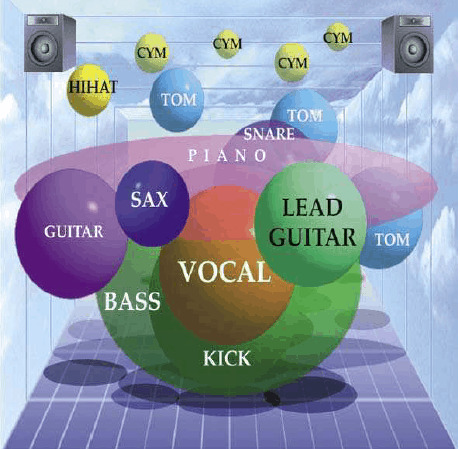
If EQ and pan are the most useful tools to create an “open” mix where instruments don’t step on each other’s frequency or placement in the stereo field, a mix wouldn't sound alive without the use of more subtle depth related effects and techniques. Effects like reverb and echo emulate natural sonic phenomenons related to distance - which is what aural depth related is all about - although, often the natural reverb of really good sounding rooms works better for certain instruments (drums in particular).... Click on the title for more

Secrets of Mixing: Reverb – Space as Third Dimension

Mixing Electro Tracks: Ducking

Purely electronic music (dance in particular) is quite a different beast to mix compared to its electric and acoustic cousins. The lack of uneven “human factors” in the instrumental tracks makes the use of regular compression less crucial, while effects like filters, delays and... whatever’s weird, garner the front stage, together with kick and bass!... Click on the title for more

Mixing Electro Tracks: Ducking

Secrets of Mixing: A/Bing

The easiest and quickest way to learn anything is by watching the pros in action. As far as mixing is concerned, we might not be able to be present in the studio with the best mixing engineers while they work, but we all have access to... their final mixes!... Click on the title for more

Secrets of Mixing: A/Bing

Why do mixes sound different on different sound systems or even rooms?

Mixing - an art which takes years to learn and a lifetime to refine - can be a frustrating experience, in particular when there are many tracks to deal with. The most infuriating thing about it is that our mixes sound completely different through different sound systems, and often not in a good way. Beside poor recording and mixing techniques, what causes these dramatic differences is often due to the fact that, in these times of home recording madness, most musicians mix their songs in environments that are somewhat flawed, and with equipment either cheap or badly set up - or both.... Click on the title for more

Why do mixes sound different on different sound systems or even rooms?

Transient Shapers for An Explosive Drum Sound

While all elements in a recording conjure up to create a great sounding track, drums are a particularly important instrument for non lo-fi, punchy rock music, which requires particularly explosive kicks, snares and toms. Great drummers playing great drums in great sounding rooms, and vintage compressors like the UREI 1176 and the Neve 33609 have been not so secret drum weapons for the longest time, but in the last few years a new kind dynamic processor, called Transient (or Signal) Shaper (or Modeler), has become crucial in morphing the modern drum sound.... Click on the title for more

Transient Shapers for An Explosive Drum Sound

Bedroom Monitoring Basics

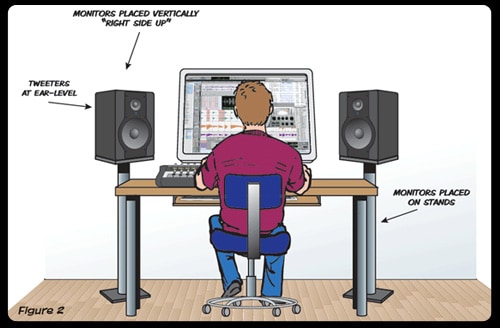
DIY musicians, who choose NOT to work on their music exclusively in the headphones, often make easily addressable mistakes when setting up their recording equipment: The most common blunder that I see in DIY project studios is monitors placed on a table and facing the recorder’s nipples (or belly). Near field studio monitors are designed to reproduce the sound accurately only at a listening angle close to 90 degrees (i.e. smack in front of them). This is why ideally you want to place them so that each on of your ears face one of them, in particular when you are mixing or looking for the right sound for an instrument you are recording. Your ears should be at the same distance from the respective monitors, or you’ll perceive one side louder than the other one. So the ideal situation is to create an equilateral triangle whose corners are formed by the two speakers and your head, with the monitors rotated and even inclined if necessary so that the tweeter faces your ear.... Click on the title for more

Bedroom Monitoring Basics

Secrets of Mixing: Reverb on slower songs

A Pocket-Sized Listening Environment